May 2026


Welcome, once more, to a newsletter written by me. Hopefully, Ghost will be a permanent fixture and succeed where neither Buttondown nor WordPress were able to for different but equally annoying reasons.
If you're completely new here, I have a day job as a narrative designer working on Football Manager, but this newsletter has always primarily focused on games by solo devs and small studios, and that will continue on this platform as well. What is different now though is that this will be a monthly thing where I'll also mention other media I've watched or read during that period, and occasionally, things from my own life outside of all of that 'consumption'.
Without further rambling, let's get into this bumper edition!
Games
If you follow me over on Bluesky, you might know that I posted some engagement bait several months ago about which games were (and still are) in my Steam backlog, a catalogue that remains just short of three figures. One of the ways I've framed this in a positive sense is that there's no real need to buy anything new while whittling it down, and I always try to keep in mind that the primary goal is still enjoying them at my own pace, and not rushing through them and ticking them off like a task I've completed. That doesn't mean actually playing them doesn't occasionally feel like a chore as we'll see in this month's collection, but that's another matter entirely.
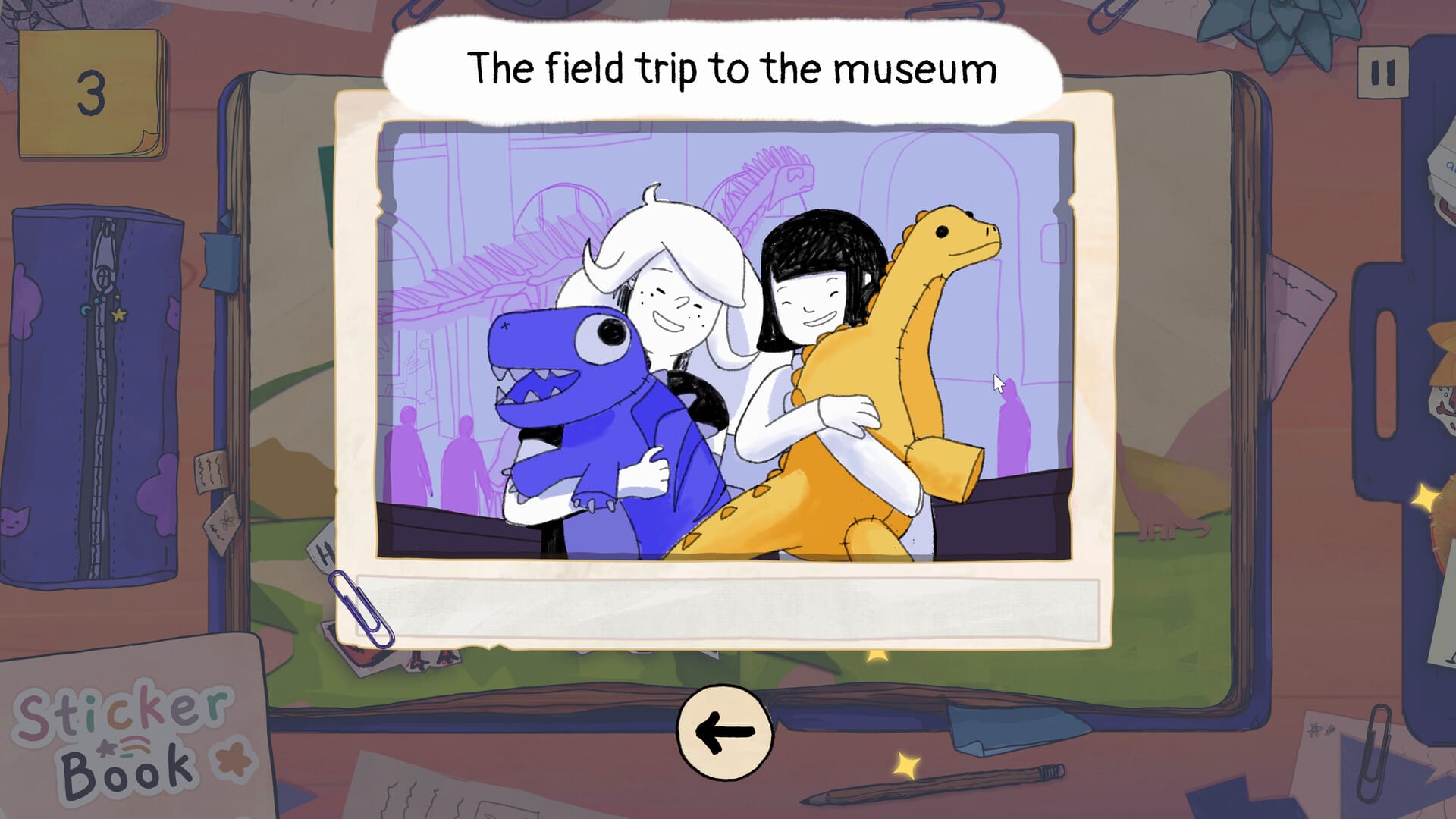
Pieced Together (Glowfrog Games, 2026) is a charming light puzzler where you are one of two best friends, charting their evolving relationship over the second half of their childhood, university, and beyond. It is reminiscent in its mechanics to Unpacking in that there are 'wrong answers' for where to place stickers and other objects in the journal, but there is no punishment for doing so besides a gentle tap on the shoulder to inform you of your poor placement(s).
The little flourishes of animation at certain points both delighted and surprised me, and these helped to ensure that there were clear changes of tone where appropriate. It clocks in at under five hours, and as someone who has checks notes no friends left from growing up, the overarching theme did resonate with me a lot.
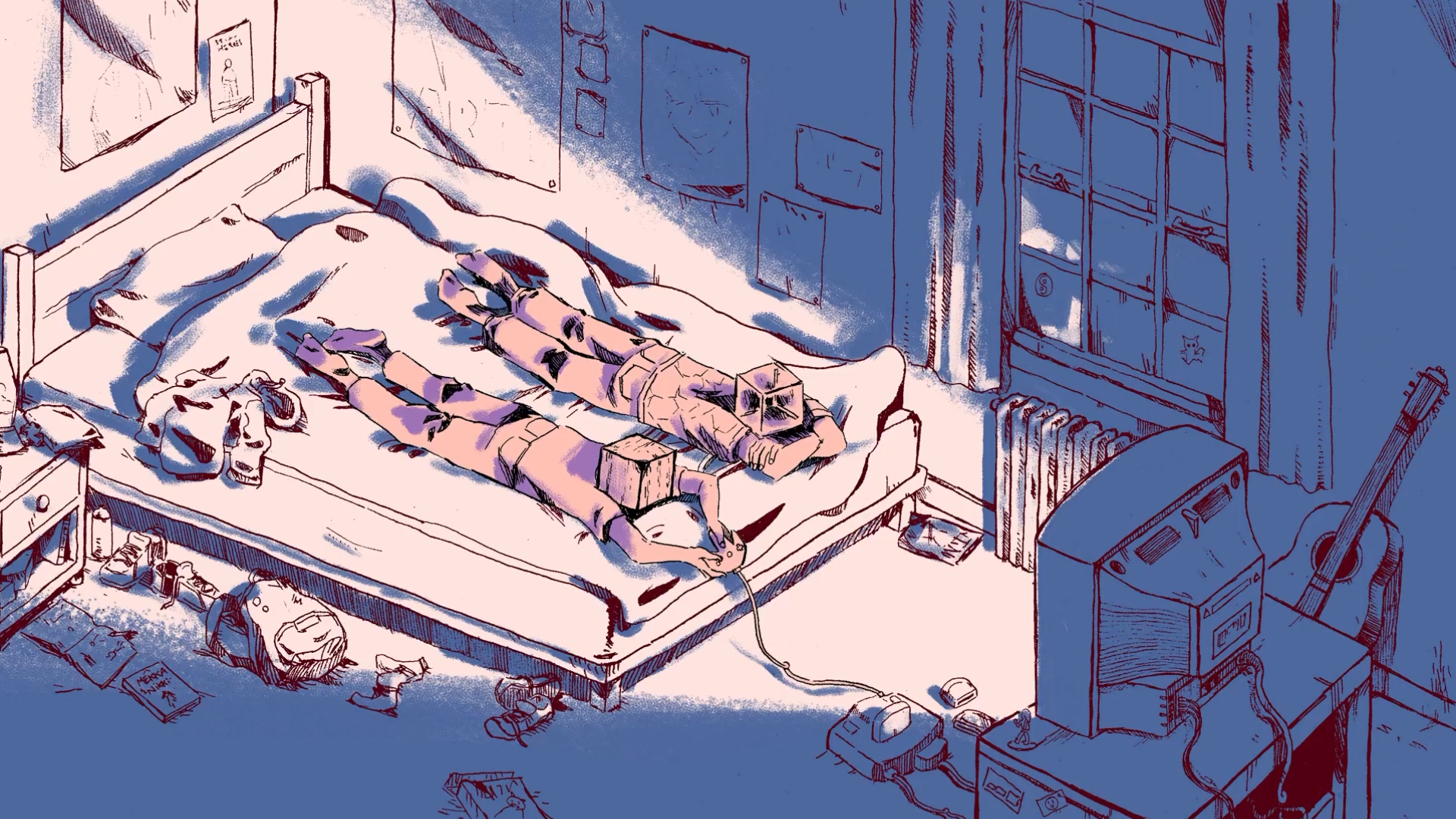
One game where the content definitely doesn't aim to surprise or delight is Wednesdays (Pierre Corbinais, 2025), which comes with all sorts of content warnings right from the outset, and perhaps equally as importantly, throughout its narrative. Gameplay is separated into two distinct spheres, firstly as a management sim along the lines of Mega Drive-era Theme Park, and secondly as something akin to a graphic novel with multiple choice answers in the dialogue that can later revisit to change should you so wish. What sets it apart is how brilliantly realised and integrated those spheres are with each other, in tandem with the art style feeling like a natural way of conveying extremely heavy subject matter.
It would be wrong to call this game enjoyable or a superb passion project, especially as much of the material is based on the developer's own life; instead, it is a devastating slice of how PTSD and repressed memories can affect people decades after the abuse they suffered as children took place.
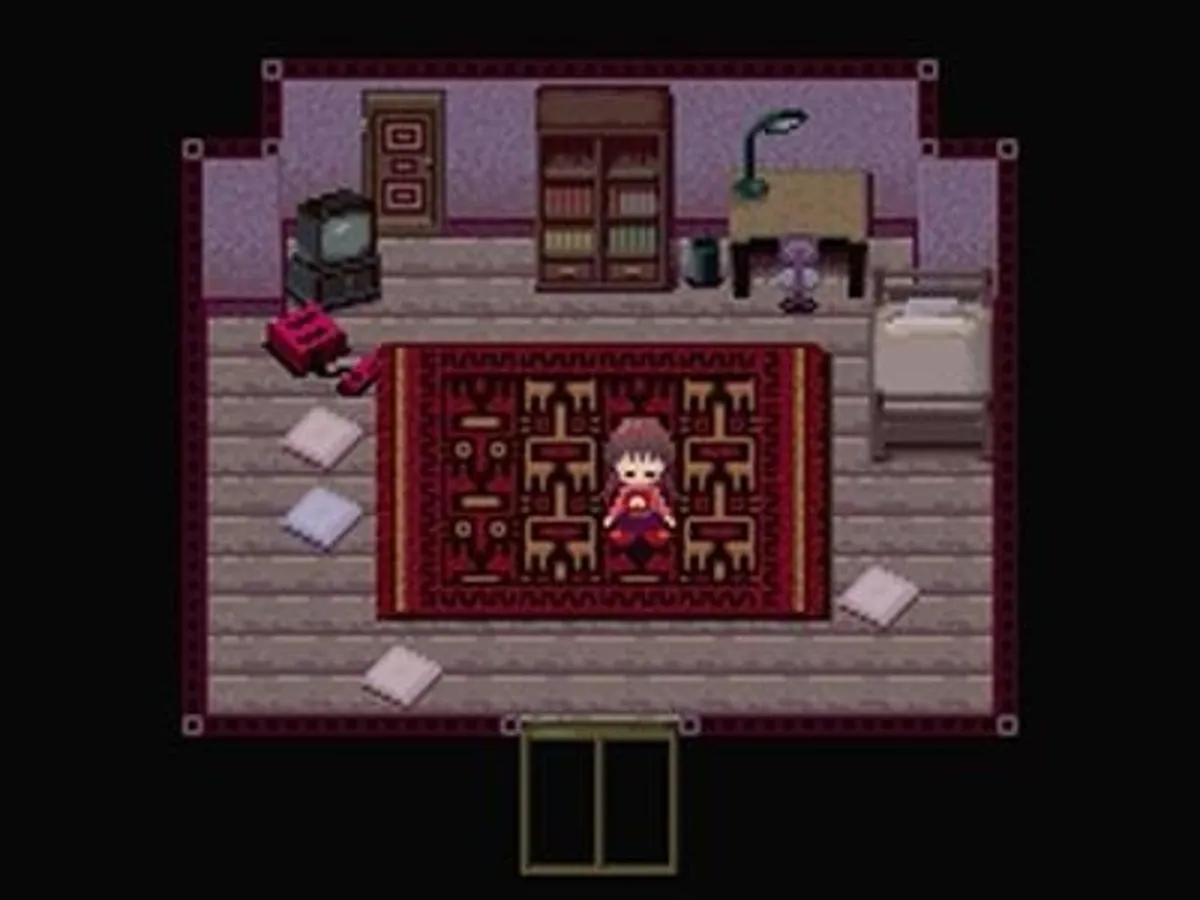
Yume Nikki (kikiyama, 2018), a curio I've had in my backlog for years, is nothing like the two above in its presentation or plot, such as it is. You play as a hikikomori ('shut-in') whose singular function is to sleep and transport themselves to different dream worlds behind a dozen worlds. Once there, they seek out different 'effects', random objects that they collect because... reasons. There's no dialogue of any kind despite the game using RPGMaker as its template, and almost everything contained within is left to the player's own interpretations.
It's certainly possible to complete in one sitting, though its save functionality didn't actually work properly for me. The best and worst thing I can say about the whole experience is that it's unique, but I don't think it has left much of a lasting impression on me. It is, however, totally free to add to your Steam library.
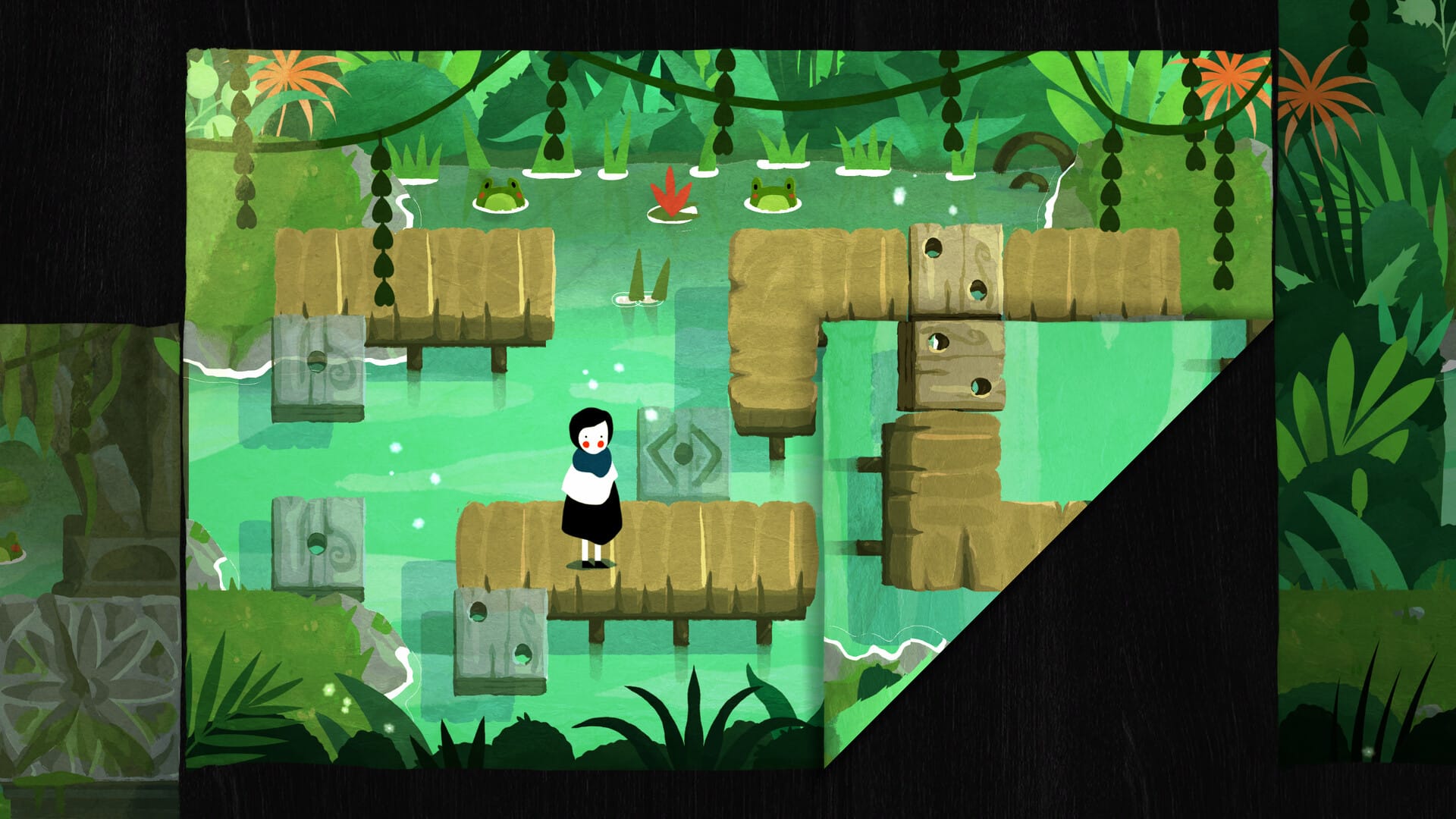
The second puzzler in this collection is Paper Trail (Newfangled Games, 2024), the demo for which I played prior to the full release around this time two years ago. Again, it bears a striking resemblance to another title, Carto, in its premise and execution. You play as a student leaving home to go to university against their parents' wishes, and to reach there, you have to fold pieces of paper in increasingly difficult and satisfying ways across a range of environments.
The visuals are enticing, and I found the puzzles themselves broadly on the difficult end of the scale, but without ever feeling defeated or that the solutions were too obtuse. The accompanying soundtrack is a standout aspect of the experience, as is the gibberish voice acting used by all of the characters except Paige, the protagonist, whose lines are restricted to interludes between each chapter or environment in the game.
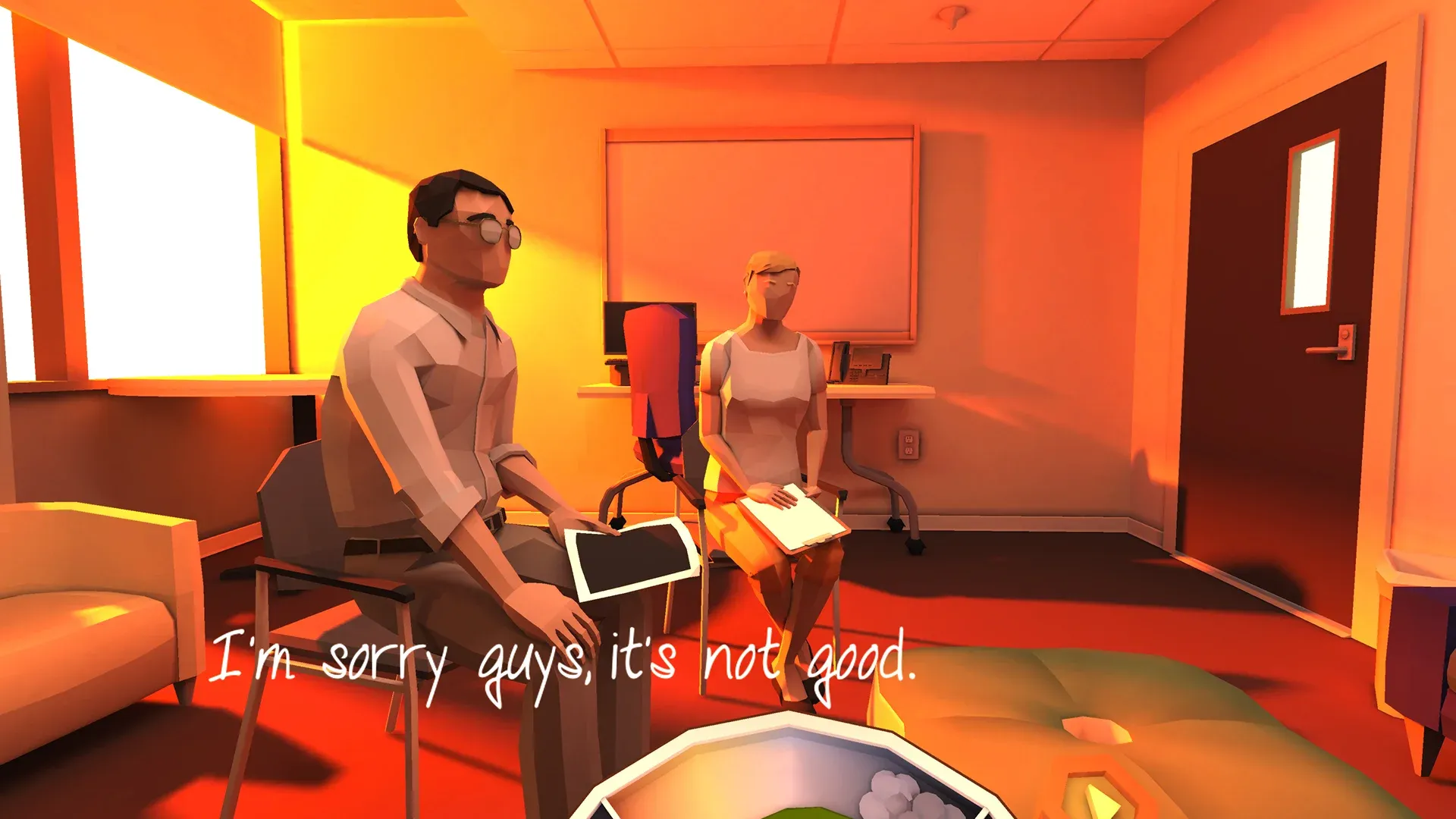
It never failed to raise a smile, which is certainly not the case with That Dragon, Cancer (Numinous Games, 2016). I first purchased this eight years ago, which says a lot about my backlog, but also about how I wanted to support the small team behind it while at the time being the parent of a two year-old, unable to actually face playing it until now. Like Wednesdays, the game is based on real life events, and this essentially serves as a (re)telling of one family's struggle to cope with their child's cancer diagnosis and tragically short existence.
There was actually more variety in the gameplay than I anticipated, which I'd originally memory-holed as being walking simulator adjacent in its execution. Not so. There are 80s arcade machine sequences, racing mini-games, and very light-touch puzzles that help drive the story forwards through a whole gamut of emotions, not all of which are negative.
Two caveats I would offer as potential negatives are how infused the second half of the game is with scripture (that's on me as I hadn't realised until that point that how utterly central religion was and is to the family, and obviously your mileage will vary) and that it was sometimes totally unclear how exactly to 'trigger' the next phase or cut-scene. Nevertheless, if you do have the stomach for a rather unique experience, then this game certainly offers something for you.
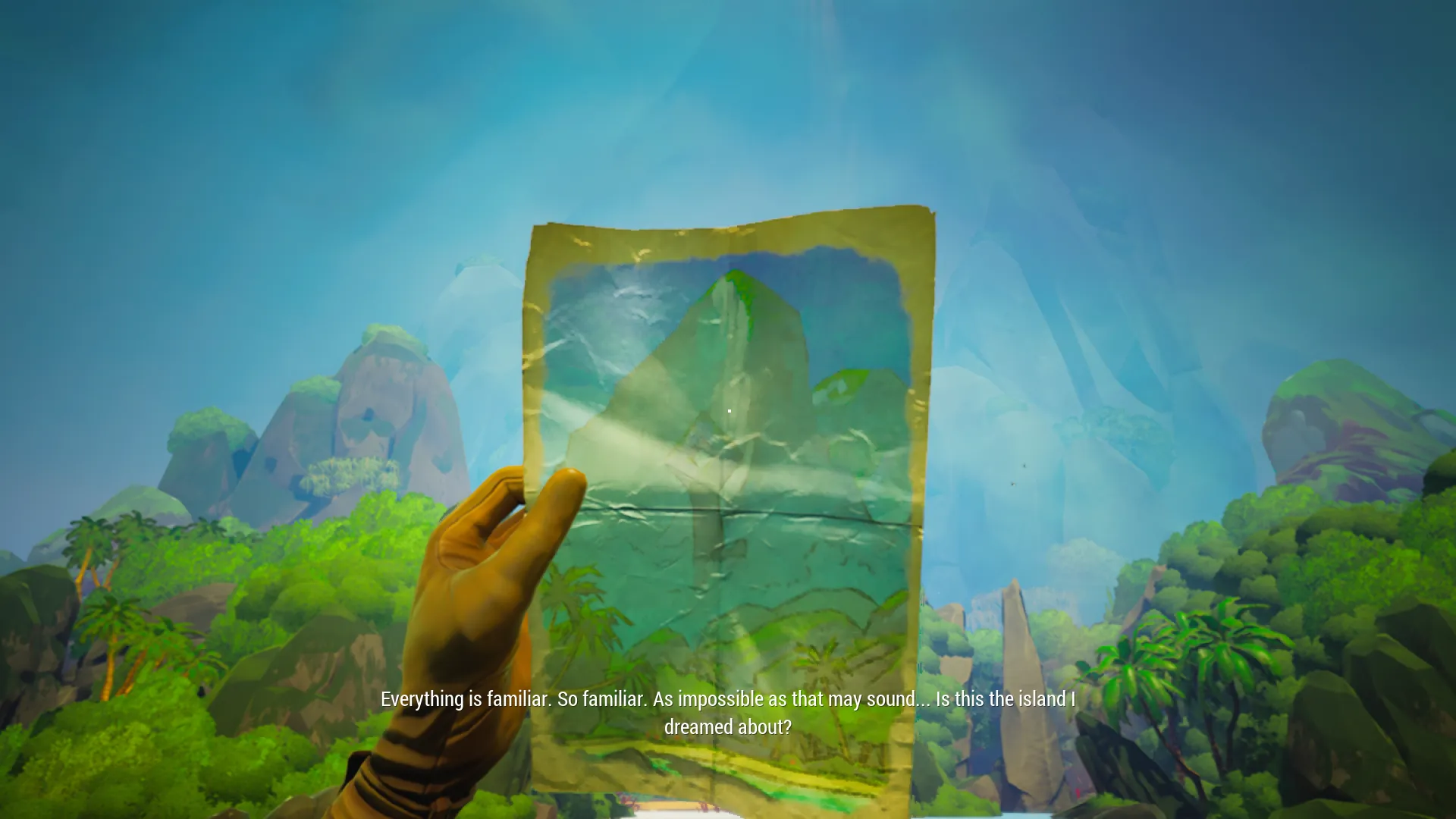
Finally this month, Call of the Sea (Out of the Blue Games, 2020) is yet another narrative-driven puzzler, which is weird because I really don't have many of those in my collection, but there are three at once here. Huh. Anyway, I first played this not long after its original release as it was on Xbox Game Pass in those halcyon days where I thought that would be my platform and storefront of choice. How times change.
In another callback to what I wrote earlier, this one did feel like a chore. I'd only bounced off it originally because my subscription has run out or I was deluged with other games to try in an attempt to justify having it at all, I forget which. You begin as Norah on a ship in the 1930s, and you have a disease of unknown origin. Your spouse has gone to a remote island in the Pacific alongside a small expedition to discover the cause and find a cure. Once you arrive, the only traces of the group are found in left-behind artefacts, recordings, photos, drawings, and the like.
I realised on my second time with the game that narratively, this approach really does absolutely nothing for me now. Much of the plot is reliant on discovering as many of these as possible, as well as Norah's musings to herself about what she experiences in her adventure. This is to say that it's not about being spoonfed on rails the pieces someone needs to work out what's going on; on the contrary, there are a number of very different approaches to narrative design (cf Elden Ring) that are executed well. It did feel like a struggle to finish, and when faced with the either/or option at the end, took the only one that made any sense whatsoever to the four or five preceding hours of play.
Film & TV
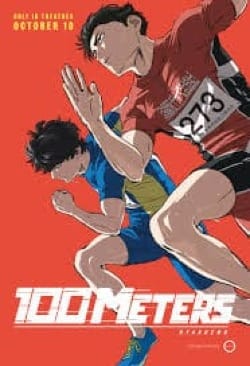
100 Meters (dir: Kenji Iwaisawa, 2025) was the first of two films I watched on the flight back from Tokyo to Warsaw. It was the first 'new' feature-length anime I've watched in years, and it chronicles the journey of two (later three) rivals for sprinting supremacy in Japan. The animation techniques used include no shortage of rotoscoping, which is extremely divisive in the format, but I thought for the most part, it made sense here as it helped to convey the speed and 'liquidity' of moving so fast over a short distance.
Equally, the path the plot took deviated quite considerably from where I thought it was going to go, proving, without spoiling too much, that it was not in the shounen genre, despite almost exclusively featuring teenage boys. That said, the pacing (no pun intended) slowed considerably towards the end, with no real sense of momentum or pay-off to the frenetic build-up and initially interesting relationship between the main duo.
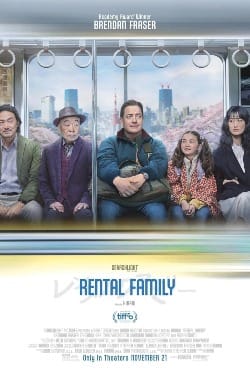
Rental Family (dir: Hikari, 2025) stars Brendan Fraser as a struggling actor in Japan who finds steadier employment by using those skills to pretend to be someone he's not, but in real-life situations, such as a journalist or the long-lost father of a precocious school-aged child. The main conceit here is that he becomes attached to the people he's 'performing' for, which in turn leads to a deeper examination of the ethics of renting people at all.
I watched this for three reasons: 1. It had an interesting premise; 2. Fraser is always affable in even his worst roles, and 3. It had been panned in the Guardian in sharp contrast to most other publications. I didn't find it deserving of such ire, and Fraser, ably helped by a strong supporting cast, converted what could indeed have been something vapid or mawkish into a low-stakes movie that nevertheless had higher things to say and convey to its audience.
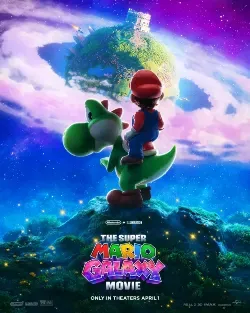
Such fripperies as 'plot' or 'character development' cannot be levelled at The Super Mario Galaxy Movie (dir. Aaron Horvath & Michael Jelenic, 2026). Regardless, it was enjoyable, no more or less than that, if you're a Nintendo nerd like I am, chock-full of Easter eggs to other games in the franchise, some decent performances by the likes of Brie Larson and Anya Taylor-Joy, and perhaps most unusually of all, a second film where gasp! the majority of the focus was on female characters and their own agency. This pits it in direct contrast to the vast majority of Mario titles, and it will certainly be interesting to see whether this bleeds further into future releases.
Books
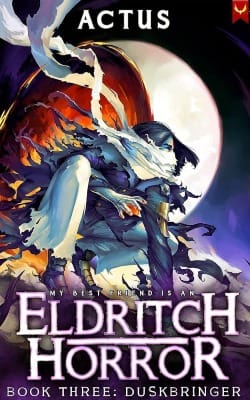
I normally listen to an audiobook every night before bed, but the Japan holiday and the jet lag that came with it represented a clear break in proceedings to the extent that I only finished two books in this period, both of which are novels in long-running series. Duskbringer (book 3 of My Best Friend Is An Eldritch Horror by Actus, 2023) is the third in a six-book series about a mage college student whose companion is the eponymous eldritch horror. The writing style is laser-focused on training and combat, with little time dedicated to much else. The pace is either glacially slow or whiplash fast, but thankfully, a lot of the dialogue is quite funny, which definitely isn't always the case with LitRPGs.
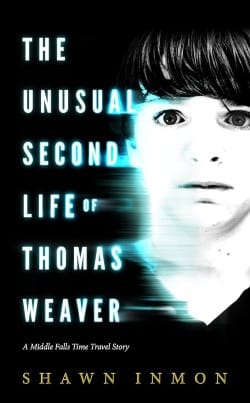
This year, I have alternated between that series and literally anything else I've yet to read or listen to, and on this occasion, it was The Unusual Second Life of Thomas Weaver (book 1 of The Middle Falls Time Travel Series, 2016). Time travel is a subgenre I have consumed plenty of media of over my life, so I have quite a high bar when it comes to anything new being absorbed into that. This was refreshing because it mixes fantastical elements I've not come across before with mundane, very earthly concerns and norms. This manifests itself in the titular character being transported back from being an unemployed, middle-aged alcoholic in 2016 to a 15 year-old in 1976.
What's skillfully done here is how the people closest to him during his adolescence notice how different he speaks and acts, and how he tries to self-correct to match behaviour expected of him in that era through hazy memories, where even events such as Jimmy Carter winning the US presidency later that year are not set in stone. My one complaint about this page-turner is that the dénouement, at least as far as Thomas Weaver is concerned, is arrived at too belatedly and neatly. However, there are many other questions and loose ends that will be addressed (and added to) later in the series...
Life Stuff
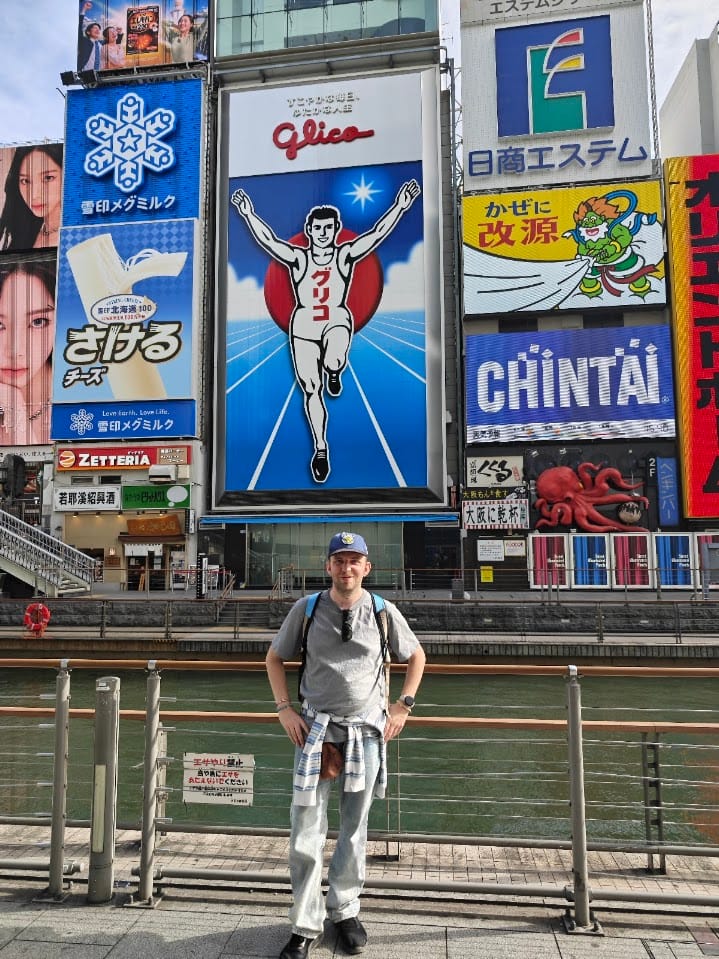
The aforementioned Japan holiday was the culmination of a dream I'd had harboured from the age of 13. Through many trials and tribulations in the 27 years since, it was actually great to be able to put all of that completely to one side and just enjoy it for what it was, without feeling the pressure to do and see absolutely everything I might've held an interest in prior to arriving.
It surpassed even my expectations, but equally as importantly, it did so for my partner and son as well. I couldn't think of much worse than going on a holiday halfway across the world for two weeks and only one person in the group getting much out of the experience!
We did some of the Golden Route, staying in Nippori, Tokyo, then close to Shin-Osaka station, followed by one final night in Otsuka, Tokyo. All three of us agreed that there was plenty more to see and do in the country, although with the expense of getting there and gestures wildly world events, it's hard to know when it might happen again, if at all.
Even if it doesn't, it did make me realise that I'd fulfilled all three of my life ambitions: having a family of my own, working in the video games industry, and going to Japan. At various points, I thought precisely zero of those would happen, especially when my mental health was at its worst, and I'm truly grateful that I've done all of that.
Just One More Thing (aka my recommended newsletter of the month)
Unfortunately, like many fine folk who had worked for years (and in some cases decades) in the journalist side of the video game industry, Tom Orry and some of his Eurogamer colleagues were recently made redundant as the bottom seemingly continues to fall out of the whole thing in favour of less thoughtful, lower effort articles slop.
While his newsletter isn't really about games at all, it is more than worth reading, packed full of musings on a wide variety of topics from family life raising young children all the way through to onions, written in an engaging, personable style. Give it a whirl over at Low Poly Mess, and if you're able to, show him some support by tossing a few coins in his direction. I can say that in full confidence as it's also hosted by Ghost, not the other lot.