July 2026

Welcome to the third edition of this newsletter! At the time of writing, the men's World Cup has reached the quarter final stage, and the expanded tournament has been relentless in taking up airspace. This has had an impact on other things I've done over the last month, so let's check out what they were below.
Games
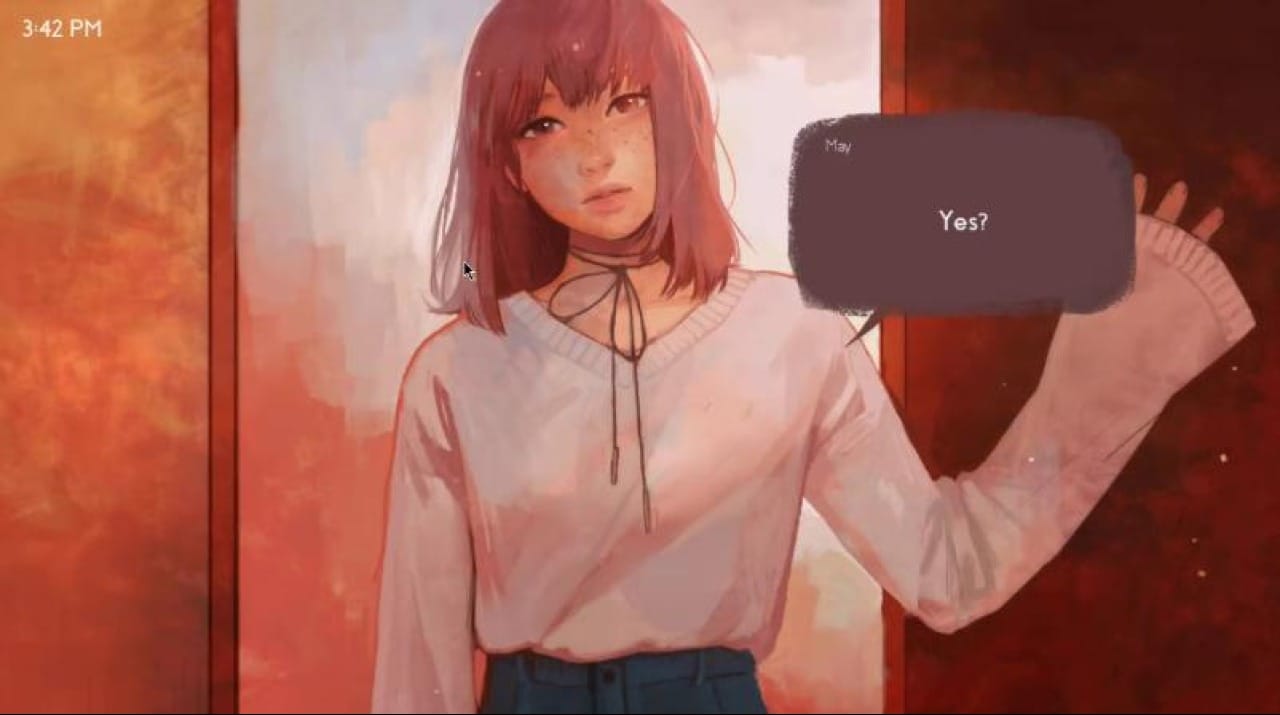
With the football dominating my spare time most evenings lately, this month has been pretty light in terms of games played, and while the length of these titles has certainly been on the shorter side, that doesn't mean the quality bar has been any lower than usual. missed messages. (Angela He, 2019) is a looping visual novel about suicide and self-harm with four different endings. The same day repeats itself, but information the unnamed protagonist acquires throughout each cycle is retained.
The watercolour aesthetics in tandem with slowed/reverbed soundtrack combine to give the narrative a dreamlike atmosphere, although the topics explored are anything but light. All in all, it's remarkable work to be so impactful in under an hour, especially by a solo dev.
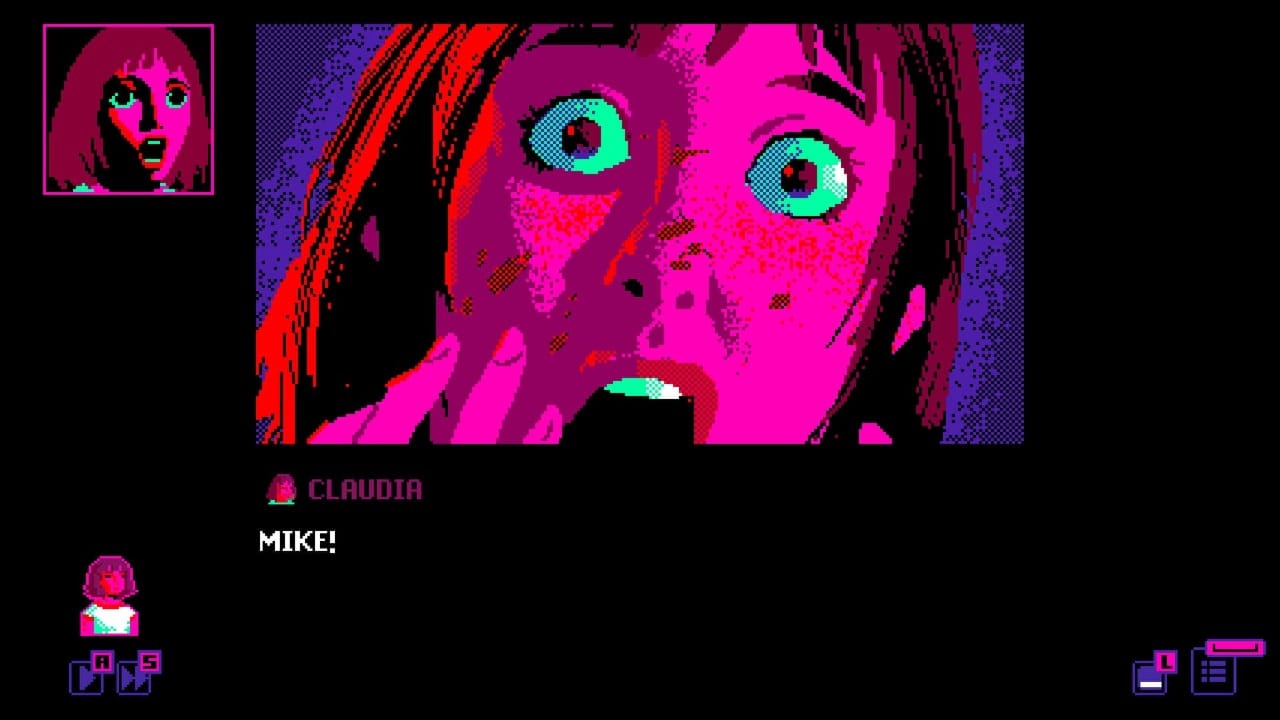
Grizzly Man (LCB Game Studio, 2024) is the fourth and latest entry (at the time of writing) in The Pixel Pulps Collection by a dev duo from Argentina. Each title takes inspiration from a specific aspect of American horror, and though there is always some crossover of characters and events from previous games, they can played individually and still enjoyed just as much.
The story, set in the wilds of Alaska and in the slasher subgenre, is told from different perspectives in bitesize chapters. The level of text per screen is kept pretty concise, which also helps you feel as though the pace was a particularly important consideration by the makers. Variety is provided by micro and minigames (in this case, solitaire and minesweeper).
Additionally, the minimalist colour palette and sound effects add more dimensions to the player's unease and tension. One playthrough can be completed in under two hours, but there are layers to be teased from the narrative by repeating the adventure, especially with the many, many ways to die and immediately retry.
Grizzly Man doesn't outstay its welcome, and I feel it's the strongest of the quad, with each iteration showing evidence of the devs' craft being honed for an ever tighter experience.
Film & TV
Watching The Mission (dir: Roland Joffé; 1986) was a long time coming: over 20 years in fact. I first heard about it through listening to a Pure Moods CD of all things in 2005. I didn't know then how prolific and influential a composer Ennio Morricone was back then (look him up, seriously), but the piece was so good, I resolved to check out the film. Little did I realise how long that would take, and waiting over two decades is bound to disappoint in almost all cases. Sadly, this film was no exception.
Set during the Guaraní War in South America, it depicts a clash between the tribe, Jesuit missionaries who wish to protect them, and Portuguese colonialists who want the land for themselves. With an all-star cast including Robert De Niro, Jeremy Irons, and Liam Neeson, the concept alone ought to have made for at least a captivating watch. Instead, the setting itself serves as the main character, and while that's not necessarily a bad thing, the actors I just mentioned should've been able to to make more of the roles they had.
The Guaraní themselves were treated collectively as 'noble savages', which was (and arguably still is) the trend with these kinds of stories. There was no insight into them at all, and the only real character development to speak of was De Niro's from a supporter of the group's displacement to a defender of both the faith and them, but even then, it seemed like he was phoning it in. The stirring, emotive soundtrack was wasted on what was ultimately quite a tepid, at-arm's-length production, leading me to conclude it's probably better in future to not wait so long between learning about a film and then seeing it.
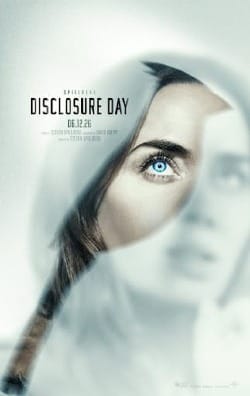
Speaking of films that are a bit of mess, Disclosure Day (dir: Stephen Spielberg; 2026) felt like positive proof that for as beloved as Spielberg is, he is not adept at crafting a story that purports to have several layers to it. Ostensibly, its primary focus is on a cover-up of knowledge of aliens' existence, with the title referring to the time when said knowledge became public.
Again, there were some big names in the cast, including Emily Blunt and Colin Firth, and it's fair to say they both undergo quite the arc over the 145-minute runtime, which also clips along at a decent pace. Spielberg films are rarely boring, but they also are rarely confused as to what the 'message' ought to be. In real life, there's a lot of cynicism about mainstream media, and a whole slew of conspiracy theories are adhered to as trust in many institutions continues to scrape the barrel.
Without spoiling the ending, this is the main narrative problem that isn't solved in anything like a believable manner. It's a shame because on the one hand, there were some strong performances, but also characters who were little more than plot devices. I'd have preferred a simpler, more coherent, and plausible journey to the one I actually received.
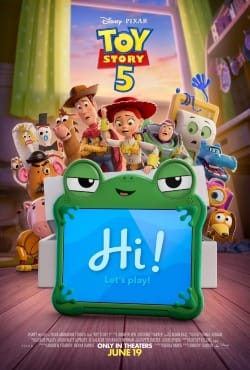
Toy Story 5 (dir: Andrew Stanton; 2026) definitely cannot be accused of being a multi-faceted movie, though I was still hoping for a little more than what I got. The inescapable trailers made it appear that this was going to be a 'tech bad, traditional toys good' tale, and there definitely was more than an element of that in the first and second acts. Thankfully, the main character was Jessie rather than Woody and/or Buzz, changing the whole complexion of the story. As you'd expect given the budget, some of the animations were simply exceptional, and there was still real heart at times.
However, if the fourth (or perhaps the third) film had a natural conclusion, the fifth, especially as little in-universe time has actually elapsed since 3, should probably be the last... though Disney are not exactly in the habit of letting sleeping cash cows lie...
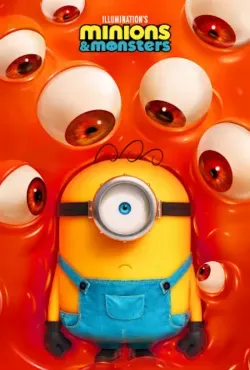
Another franchise that prints money is Illumination's Minions. The latest spin-off, Minions & Monsters (dir: Pierre Coffin; 2026), is a love letter to the golden age of Hollywood, stuffed to the gills with visual gags and references to that era, as well as more modern works like Star Wars, The Matrix, and E.T. Almost nobody over a certain age sits down at a cinema expecting much depth or heft when the diminutive, gibberish speaking creatures are on screen, but the first 20 minutes or so were actually quite promising. Had it remained a tale about them finding their niche alongside greats like Charlie Chaplin and Buster Keaton, it could've been a shining example of how to serve very different audiences.
Instead, it became about the monsters in the title, disintegrating into well-worn territory, and despite it being set in the late 20s and early 30s, the ultimate 'evil boss' for them to work for is completely avoided for good reason, though it does call into question the decision to focus on that time period. The ending is also odd, as it transpires to have been a film about a film about a film...
Books
This will be the last month of solely concentrating on The Middle Falls Time Travel saga by Shawn Inmon, partly because I only have the first 12 books, but also because of (self-imposed) fatigue with them, despite there being actually quite a lot of variance within each (mostly) self-contained novel.
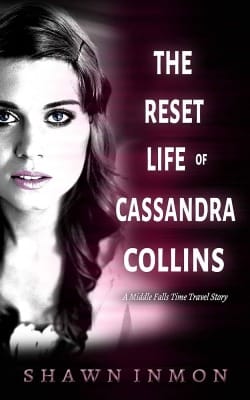
Of the four mentioned here, The Reset Life of Cassandra Collins (2018) was the biggest disappointment because the premise and time period both could've been so much more. Cassandra Collins is brought up in a life of luxury, but doesn't find satisfaction in it, coming to regret taking a backseat in terms of making big decisions that might've upset her family and seen her ostracised from them. When she wakes up in her 18 year-old body the second time around, she vows to go to Berkeley University and forge her own path against the backdrop of student protests and youth counterculture.
What could've been a real exploration of the Summer of Love turns into a narrative that far too predictably and conservatively wraps up well before the last chapter, and it felt like the 'intervention' of one of the Watchers in the second half of the book was the author's way of attempting to rescue it from petering out completely, Yes, there are drugs, music, and sexual references aplenty, but it still seemed as though they erred on the side of playing it safe.
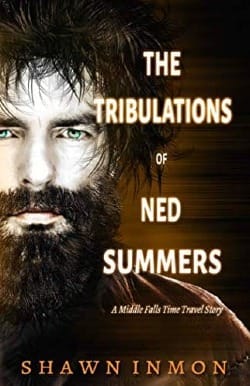
The Tribulations of Ned Summers (2019) struck a different tone, with the parable being about some things being unpreventable, even in a universe where someone can die and keep coming back to an earlier period of their life. Ned Summers goes on a date with a slightly older woman, who is then murdered several hours after he drops her back off at her house and she sneaks out. As the last person to see her alive, he is accused of killing her, and no matter how many times he 'resets', she still dies.
With the help of his dad, he eventually withdraws from society, becoming self-sufficient and living in a cabin in the woods, and once more, a watcher intervenes to tell him to stop bothering trying to prevent the murder, or even to devote thought to it. He does eventually discover the culprit, which isn't pulled off successfully as while their identity is a surprise, it doesn't carry much weight or subsequent impact because of the overriding message.
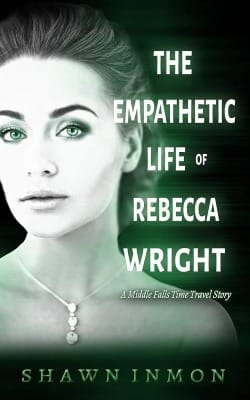
The Empathetic Life of Rebecca Wright (2019) possesses similarities to Cassandra Collins in that a female protagonist starts out in a wealthy, stable environment, but takes a contrasting course afterwards. It's also the first of these books where the woman is the main character and doesn't primarily focus on having a relationship with a man to give their life meaning. Indeed, the reset point in this is her husband announcing he's leaving her, and she never tries to prevent that, much to my surprise.
It's also the only one thus far to be primarily set in the 80s, which is done because her younger brother is one of many victims of the AIDS epidemic. Over many cycles, she manages to stop that happening without spooking him too much about future events (such as his imminent death), and their double act is definitely one of the strongest in any of these books, being both believable and empathetic, which as the title suggests, is the skill Rebecca Wright learns over the course of the narrative.
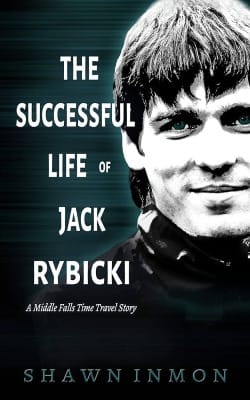
The Successful Life of Jack Rybicki (2019) has an undertone of second-generation racism at its core; the charismatic titular character is plucked from obscurity and gains Hollywood stardom, but in the process, has to change his surname, literally and figuratively erasing and distancing him from his Polish-born parents, as it would be 'hard for people to pronounce and forget'. Racism is an underexplored topic in these books as a whole, given the vast majority of them are set in a small Oregon town in the 60s and 70s.
The twist with this title is that his high school love interest is revealed to also be a time traveller close to the end, which is another big departure from previous entries. Their relationship underpins events across Jack Rybicki's three lives, although his partner is only the same person in the second and third, tantalisingly bringing up that question of what makes someone the same across different dimensions/resets. Definitely the strongest of the four here, and one that gives me hope other big issues, be they social or metaphysical, will get an airing in future works.
Life Stuff
For the first two entries on this newsletter, I had pretty light, fun snapshots to put in this section. Not so this time. While nothing 'bad' has happened since either of those, I wanted to take a self-indulgent opportunity to muse on something that's been gnawing at me for, to be honest, years: friendships, or the lack of.
Don't get me wrong, I have plenty of things to be grateful for, and I have had periods in my life where I have had what I feel is absent now, so this isn't some sob story about something I've never obtained, but a reflection on what has been and what hopefully will be in the years to come.
In 2026, it has theoretically never been easier to keep in touch with the vast majority of folks with a whole suite of options, these options have propagated a disinclination for those connections to sustain themselves. Not in every case of course, but undivided one-on-one or small group attention, at least anecdotally speaking.
Some factors contributing to how I currently feel could be said to be self-selecting: I'm 40, I'm male, I have a family, I live in a rural area, and I don't drive. Together, those factors are likely to limit things, though I don't feel they're the whole explanation, nor should they be used as 'excuses' as to my current predicament.
Since moving to the Forest of Dean, I have tried to focus on making friends through one of two ways: either a hobby (in-person D&D) or online, but with an emphasis on these people being 'reachable' (in the Gloucestershire, London, or Bristol/Bath areas).
In the first case, it has been partially 'successful'. Before Covid, one of the initial forays I made was to set up a D&D group from scratch, which sustained itself during and after the pandemic, albeit with some changes to the original members. Sometimes, we'd even do things together outside of those sessions, like hang out in person or online, though that seemed to dry up towards the end. I took the decision to leave that group, having not slept at all one Sunday night, agonising over what to do for a full four hours. I went from seeing five or six people every week or two to none of them with any regularity whatsoever.
Nevertheless, I tried again at the start of 2024, making another group closer to home with different people. We played in a micropub for several months before decamping to the DM's house. It sustained itself for a while, but as ever, a mixture of events in people's lives and a lack of energy eventually brought that to an end at the beginning of this year.
With online, I've tried many different approaches over the years. I'd all but given up on social media before Bluesky started to become popular, aping in many respects the early 'glory days' of Twitter before that turned sour. There, I was able to combine several aspects of my life and interests: narrative design, indie games, politics, and football itself to a lesser extent in one account (I'd previously felt I had to keep these separate to avoid 'annoying' mutuals).
The peak period for that was at the start of 2025. I still felt fresh off attending Develop in 2024 as I'd managed to keep in touch with people I'd met both through meetings I or they had set up, or by chance during those three days, alongside a few other folks working in the industry who lived nearby. One of my goals last year was to keep that 'energy' up, but it increasingly became apparent that this was going to be difficult to achieve.
Now, halfway through 2026, I just feel a lack of fulfillment with trying to do this online. Maybe the problem is the 'trying' itself, but I only reach out to people I have a genuine interest in socially. Various other factors have combined to make this year difficult in terms of meeting folks; at the start of the year, I had to look after my partner after she hurt her knee (a situation that has yet to fully resolve itself), couldn't attend Develop or other events of a similar nature like Impact in Bristol, and I haven't been to my work office in London yet, either.
If I thought of this like a dating app but just for friends, I would say all I'm 'looking for' are folks who share similar-ish values, have similar-ish interests, and who live in or near one of the aforementioned areas. Oh, and equity in the friendship. That's it. Not exactly lots of impossible red lines.
Online spaces can be good. They can have a semblance of community, of reciprocity, of shared values and interests, but at this point, I'm just not satisfied with a friendship only existing there. This is partly why I've taken a break from Bluesky; it's not because something happened or someone said something to upset me, it's because I felt like I was pouring a lot of time and energy into it at the same time as absolutely nothing was happening in 'real life'. Going cold turkey on the platform in the long run is not the solution either. It's something I've done in the past, and the result was simply feeling more isolated, not less. I do think cutting down my usage and trying to make the time spent on there more meaningful is closer to the right answer.
Just One More Thing (aka my recommended newsletter of the month)
Andrea Blythe is a hugely creative person of a similar age to me who has worked both inside and outside the video games industry to high acclaim across a number of fields. Infinite White Space showcases these fields, and the 'Culture Consumption' column served as the blueprint for my own posts on here. She is an accomplished poet and writer, and she's also recently done a fascinating series of interviews with women working in horror, such as Natsha Sebben, whose upcoming title Psychotic Bathtub has been on my Steam wishlist since before last Christmas.