September 2026


Welcome to the fifth edition of my newsletter! This continues the Yakuza/Like A Dragon series playthrough that started when the summer holidays were still the present rather than in the rear-view mirror...
Games
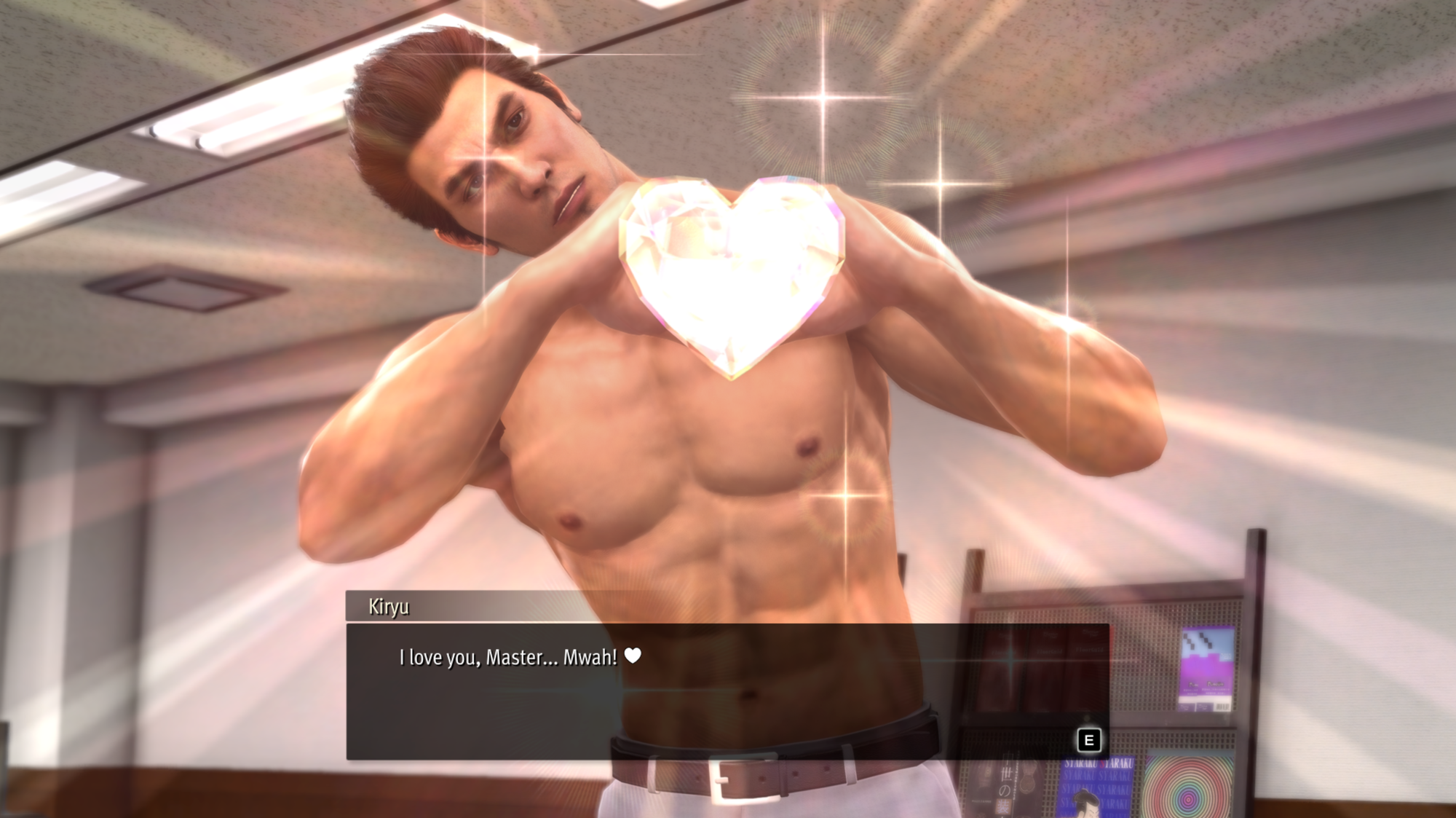
Yakuza Kiwami 2 (RGG Studio, 2025*) is the third of the Kiwami remakes, and immediately feels different to its two 'predecessors' with its more fluid and flashy combat, which occasionally gives rise to some unintentionally hilarious physics, courtesy of the Dragon Engine. Nevertheless, narrative-wise, it's a return to the kind of form of the much beloved 0: Director's Cut, deftly weaving in a very real 'Tokyo envy'/Kansai vs. Kanto rivalry into a plot about yakuza clan power struggles (as ever), but also a slow-burn romance between the ubiquitous Kazuma Kiryu and Sayama Kaoru, an Osaka-based detective.
The only aspect I wasn't fully onboard with was the main antagonist, Ryuji Goda. His characterisation was akin to a shounen villain who realises all too late the path they've pursued was the wrong one, and his clashes (no pun intended) with Kiryu didn't really work for me. However, one of the minigames really shines (pun intended), with an updated Cabaret Club offering some of the best moments the game has to offer away from the main story threads.
The Clan Creator on the other hand heavily features Goro Majima and a number of famous veteran pro wrestlers; the Majima Construction theme gets in your head quickly, much more so than the odd mishmash of tower defence/RTS minigame itself, with very little strategy involved in winning each mission. It does however include characters from across the whole series if you have the DLC, such as ones who don't make an appearance until far later. There is also a short, separate story mode that ties up what Majima got up to between the events of 1 and 2, with a truly poignant conclusion to his relationship with Makoto Makimura from 0.
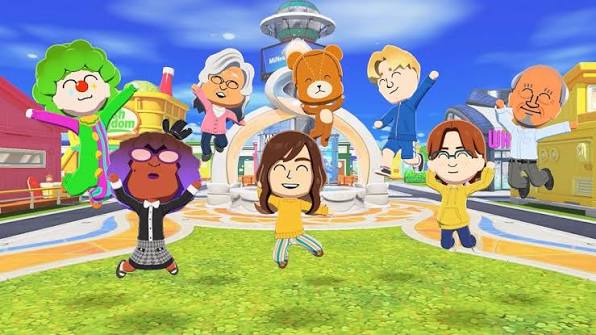
I wasn't sure whether to include Tomodachi Life: Living The Dream (Nintendo, 2026), mostly because it's a title without a true end, but I felt compelled to once the credits rolled unexpectedly due to an action I took when I levelled up my island. For those that don't know, it's a very Japanese light life sim where you are the god-like figure in control of everything from the Miis themselves and the island they live on down to the phrases they utter and things they eat.
While many people make their loved ones and/or celebrities, I chose my community from the many animal plushies we have in our house, each one of whom has been imbued with their own personality, quirks, and birthdays. This approach to me seemed the 'purest' form of whimsy, and I have played it on a steady basis in small doses for several months. There's no overarching narrative to draw from, but the relationships between the characters are the basis of most of the intrigue.
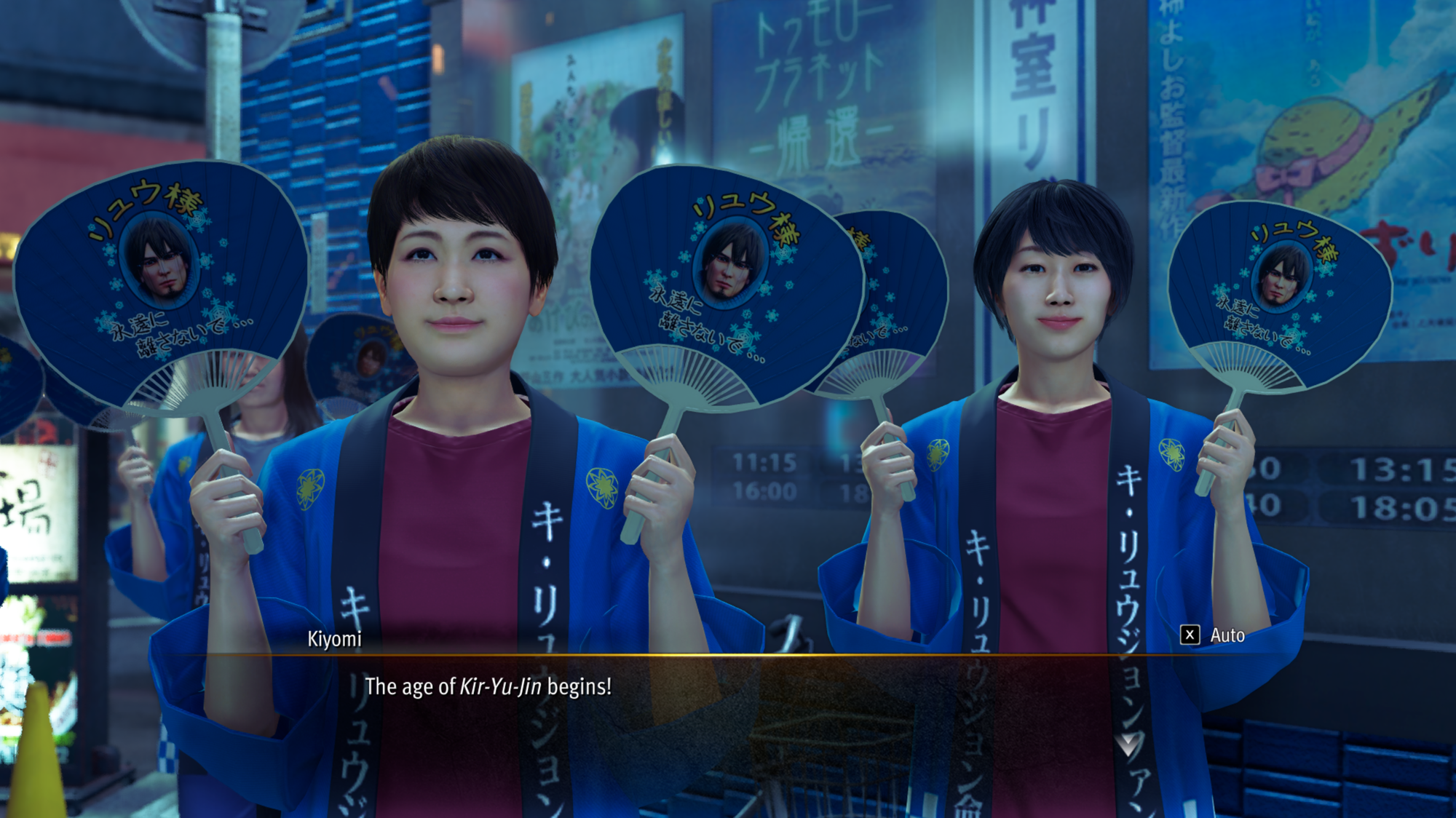
Going into Yakuza Kiwami 3 & Dark Ties (RGG Studio, 2026*), I had a degree of trepidation, purely based on the middling reviews the remake of what had hitherto also been the 'worst' numbered original in the series had received. I initially thought the main reason for this was because of a decidedly questionable casting decision as the opening was quite strong, introducing players to a totally new area (Okinawa) and providing a greater focus than ever on one of its minigames where Kiryu increases his bonds with his 'niece' Haruka Sawamura and the other orphans at Morning Glory.
Instead, this terrible thing called the main storyline took over a few chapters in, where no trope from soap operas was left untouched, stretching credulity even within the series' own 'rules' beyond breaking point to the point where I checked out mentally with several chapters remaining. The last time this happened was during Final Fantasy VII: Rebirth, so it's really not often!
These games have always had moments and set pieces in them that wink at the player, conscious that they bend but don't break the suspension of disbelief. Unfortunately, Kiwami 3 ignored all of that on several occasions, and none of the minigames or wealth of additional content could mask my first disappointing experience, and it seems apposite to take a small break from it now.
Film & TV
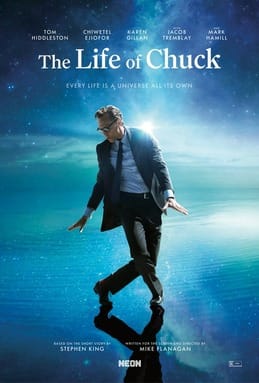
The Life of Chuck (dir. Mike Flanagan, 2024) is an adaptation of a Stephen King short story, lighter in tone (but still far from light) than his usual mix of horror and mystery in smalltown America. Tom Hiddleston stars as the titular character whose story is told in three distinctive periods of his life in reverse order: Act 1 ends with his untimely death at the age of just 39, Act 2 at the precipice of his health declining, and Act 3 as he learns of his eventual fate in Act 1.
So far, so Benjamin Button. However, the first arc barely features Chuck as a character at all; instead, catastrophic events in the outside world become more and more inextricably linked to him until it's revealed that it is in fact his dying world. The middle part almost seems like a palette cleanser by comparison, with a healthy Chuck taking centre stage to literally strut his stuff in the centre of a shopping street. Lastly, Chuck is a kid growing up with his grandparents who have very different personalities and outlooks on life; his grandmother teaches him to dance while his grandfather (played by Mark Hamill in a pretty stellar cast) is much more morose, forbidding Chuck from entering the room in the attic, drunkenly muttering about being able to see the future of certain people... and lo, the film comes full circle.
Though the movie does operate on a certain level of schmaltz at all times, it didn't detract from my enjoyment of it, nor did I feel I was being emotionally manipulated. I don't think it was saying anything new or particularly profound beyond enjoying the small moments and people who care about you when both you and they are around.
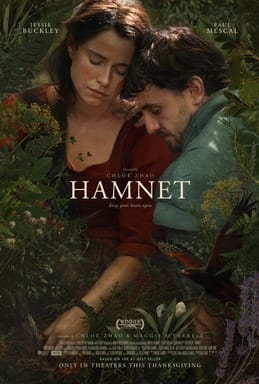
Another film pregnant with poignancy and adapted from a book that I watched over the last month was Hamnet (dir. Chloé Zhao, 2025), starring Jessie Buckley as Agnes, Shakespeare's (Paul Mescal) witchy spouse, though he isn't explicitly revealed as such until a fair chunk of its runtime has elapsed. It is less about the famous bard himself and much more about the family he helps to make and then frequently leaves behind in Stratford-upon-Avon to work in London. Hamnet refers to the name of one of their three children; not much is known about them in reality, so the narrative fills those blanks, as does Buckley's all-consuming performance as someone who viscerally feels everything that happens in their home.
Max Richter's musical fingerprints are all over it, most notably at its conclusion when Agnes travels all the way to The Globe Theatre, ostensibly to divorce her husband because of a burning rage at his absence from their home when Hamnet dies, but instead is at turns in touching distance of the stage where Hamlet is being performed, and touched by the recognition that all of Shakespeare's grief has been poured into that play.
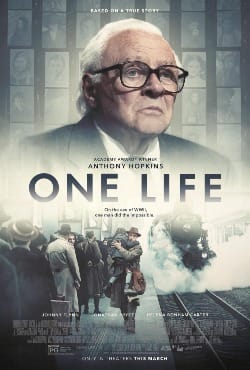
One Life (dir. James Hawes, 2023) chronicles the extraordinary path of humanitarian Nicholas Winton's destiny, being integral (but not alone) in the setup of the Kindertransport from former Czechoslovakia to the UK before it was overrun by Nazi Germany just prior to the outbreak of the Second World War. Anthony Hopkins plays the older version of Winton in the 1980s, pottering about and keeping himself very much to himself in his dotage until his documents from that extraordinary period are shared with a certain Elisabeth Maxwell (Marthe Keller), bringing to light his part in saving so many children's lives.
The film flits back and forth between both eras, with young Winton aided back in the UK by his assertive mother (another fantastic turn by Helena Bonham Carter) and the 'present' incarnation by his wife Grete (Lena Olin) and Esther Rantzen (Samantha Spiro) running with the torch on That's Life, an otherwise light entertainment programme watched by millions on the BBC. As Winton was in real life, Hopkins is self-effacing and plays down his achievements, and though there's certainly an argument that the film could've focused more on both the others who helped Winton in Prague and on the transported children themselves in between the bookends, you'd have to have a heart of stone not to be moved when many of those he'd brought over were in the audience with him on the show stood up and applauded him.
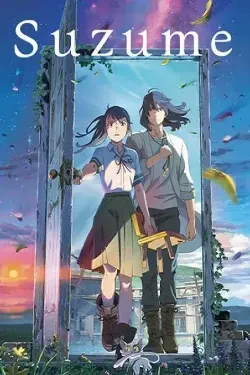
Now for something completely different. Suzume (dir. Makoto Shinkai, 2022) is a feature length anime by the same director behind Your Name, considered by many (including me) a modern classic. It mixes fantasy and Japanese folklore with a very modern kind of road trip, as shown in many of the cuts and techniques used, as well as what can only be described as product placements by brands, perhaps done to 'ground' viewers in different areas of the country.
The titular protagonist, still in high school, teams up with a university student to keep doors to the Ever-After (the afterlife) closed in order to prevent more natural disasters devastating the population. At its core, it's about Suzume's memories of her mother being one of the many victims of the 2011 Tohoku earthquake and tsumani. It packs a lot into its 122 minute runtime, with the visuals and throwback soundtrack combining to ensure viewers don't dwell on too much at any particular juncture.
Books
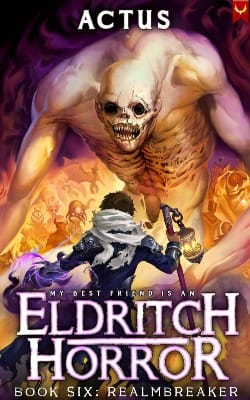
I'm not going to bother devoting much time to discussing Realmbreaker (Actus, 2023), the sixth and last book in a LitRPG series that had its moments but treaded water for most of those tomes... only to fall right in it when the main selling point in the first place, a slow build/levelling of the protagonist, went completely out of the window. I'll never get the 72 hours or so of my life back that I used to listen to the whole thing, but it's at least helped me to know what I should avoid with my own writing. So there's that.
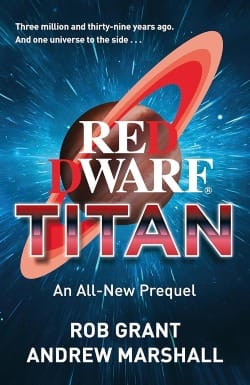
It's never easy to return to writing another entry into a series that were published well over three decades, especially when the rights were in dispute for much of the interim, the television show the books were based on came and went and came again to varying degrees of critical acclaim, and most pertinently of all, one of the authors died before it saw the light of day. Red Dwarf: Titan (Rob Grant and Andrew Marshall, 2026) is that book, and sadly, Grant died aged 70 back in February. I don't precisely know whether the manuscript had been finished by that point, but regardless, it still radiated Red Dwarf from every page, helped enormously by Chris Barrie voicing all the characters with his typical aplomb despite now being a good 40 years older than most of them are supposed to be.
As the image above suggests, the setting is a prequel to the events of all the other books (and just before Season One of the TV show), and some of the humour has undergone a noticeable refresh both in its tone and reference points. For example, the internet as we know it today wasn't a factor when Red Dwarf was conceptualised, though given it's meant to be set in the 24th Century anyway, it didn't impinge on my enjoyment. The chapters are told from different crewmates' points of view, most notably Kochanski, giving her a more rounded personality and her motivations more heft than simply 'Lister's one-time girlfriend he still pines for'.
It was naturally constrained by sheer dint of being a prequel in what it could do, even with the usual 'alternate dimension' theme appearing. Nevertheless, it still manages to keep the reader guessing while clipping along at a good pace.
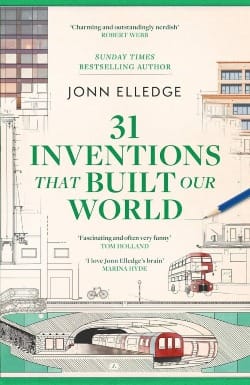
31 Inventions That Built Our World (Jonn Elledge, 2026) is the latest fact-filled tome by one of the best contemporary journalists and authors I've come across. As the title suggests, there are 31 (well, 33) chapters, with each one dedicated to a different invention, the existence of many of these people take for granted, especially in 'developed countries'. Ranging from buses to street lighting to how different places organise addresses, Elledge's style brings to life what at a poor wordsmith's pen could be very dry subject matter, and nobody should underestimate what a powerful skill this is, especially when writing to educate and inform.
As ever with history and who was the first to invent something, it's about who marketed themselves as being that person or what makes for the most interesting as much as it anything else, and there are many people whose names would otherwise have been forgotten in the mists of time who at least have their deserved moment of fame within the pag.es.
It's easily the best non-fiction book I've read/listened to so far this year, and it would be hard to top. Listening to him feels like being across from a smart friend in a pub or café who imparts knowledge for the sheer joy of sharing it, rather it being laced with any kind of arrogance. That's a difficult balance to achieve, but achieve it he most certainly does.
Just One More Thing (aka my recommended newsletter of the month)
Hanafuda Report is a Nintendo-themed newsletter by Chris Brandrick, who also publishes YouTube videos covering up-to-the-minute news from the Big 'N'. Most of them are bite-sized, and the emails are insightful round-ups of things you might've missed, not least because of how much information and disinformation spreads online these days. Membership ranges from being completely free to the equivalent of $5 in your local currency.